The short answer is yes — you can absolutely visit Köprülü Canyon without ever stepping into a raft. But the canyon has a way of drawing you toward the water, and it's worth understanding why.
Visiting Köprülü Canyon by car
Köprülü Canyon National Park sits in the Taurus Mountains of Antalya Province, north of Manavgat and reached through the village of Beşkonak. A good road brings you into the heart of the park, where cypress and pine forest crowd the slopes and the Köprüçay river glints turquoise below. You can drive in, park, walk the riverside and soak up the setting entirely on foot — no life jacket required.
The park is a genuine nature reserve, and much of its appeal is simply being there: cool mountain air, the smell of resin from the trees, and the sound of cold karst-fed water moving over stone. Many visitors spend a morning wandering the banks, snapping photographs and stopping at one of the riverside restaurants perched over the water.
The Oluk Bridge
The park's most photographed landmark is the Oluk Bridge (Oluk Köprüsü), a graceful Roman-era stone arch that leaps the Köprüçay in a single span. It has stood here for many centuries, carrying travellers over the gorge long before rafts arrived, and you can walk across it and look straight down into the clear green current. It is one of the finest surviving ancient bridges in the region and reachable directly by road.
The ruins of Selge
High in the hills above the canyon lie the ruins of Selge, an ancient Pisidian and later Roman city. A steep, winding mountain road climbs to it, threading past strange eroded rock formations before delivering you to a remarkably well-preserved theatre with sweeping views over the Taurus range. Selge rewards the effort of the drive, and it is one of the most atmospheric ancient sites in the whole of Antalya's hinterland — busy in imagination, quiet in reality.
Walking and the wider region
For those who like to travel on foot, the long-distance St Paul Trail passes through this wider region, linking the coast with the mountains and offering days of walking through classic Taurus scenery. Even a short stretch near the canyon gives a sense of the landscape that road-bound visitors miss.
So why is rafting the standout way to see the gorge?
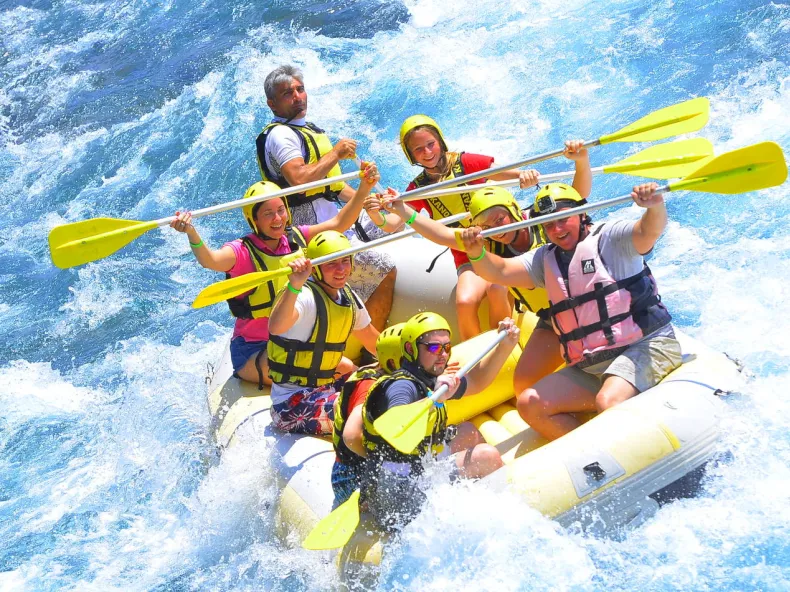
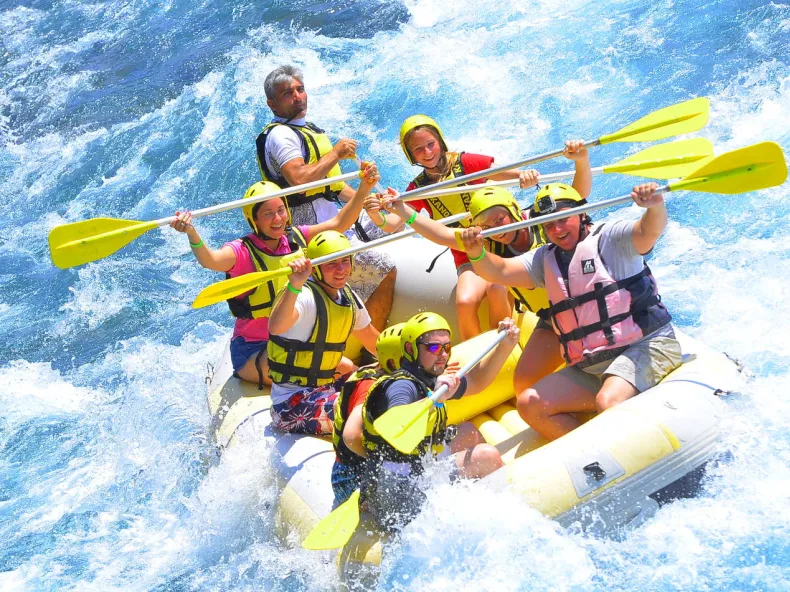
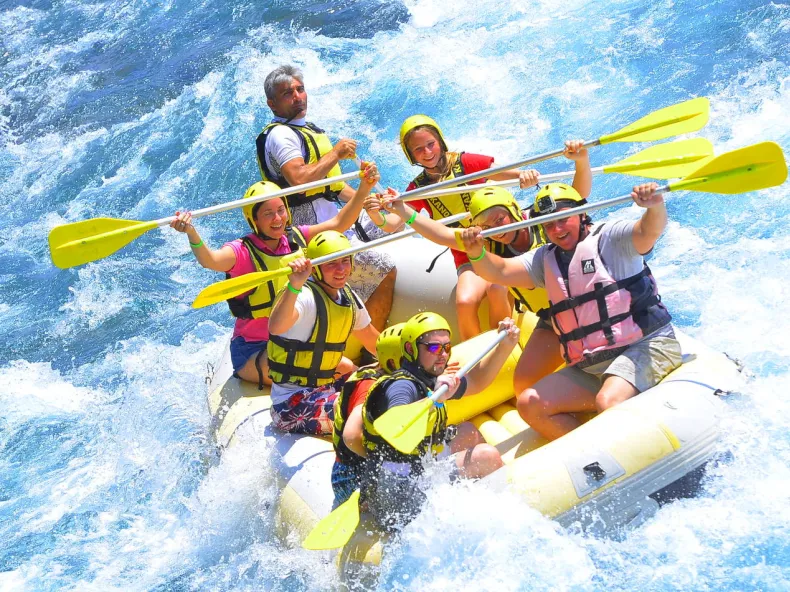
Here is the honest part. You can see the canyon from the road, from the bridge and from the ruins — but the gorge itself, the narrow, sculpted heart where the river squeezes between rock walls, only truly reveals itself from the water. Rafting on the Köprüçay covers around 14 kilometres of gentle grade II–III water: cold, clear and turquoise thanks to those karst springs, threading through cliffs and forest that no roadside viewpoint can match.
It is a friendly, family-suitable stretch rather than a white-knuckle plunge, which is exactly what makes it the classic Köprülü experience. From river level you drift beneath overhanging pines, past shaded pools you'd never reach on foot, with the canyon rising sheer on either side. Guides handle the technical work, so you can simply look up and take it in. If you'd like to browse the options, our rafting and canyon tours lay out what a day on the water involves.
The best of both worlds
You don't have to choose. Many visitors raft in the morning, when the light is soft and the water at its most inviting, then drive up to the Oluk Bridge and Selge in the afternoon once they're dry. A rafting day usually includes transfers, so it's an easy way to reach the park without navigating the mountain roads yourself — and you can add the bridge and ruins on either side.
If you're staying on the coast, plenty of trips run to the canyon from the main resorts; you can see how a rafting day from Side comes together, transport and all.
Visit Köprülü Canyon however you like — the bridge and Selge are marvellous, and the forest is reason enough to come. But if you want the gorge to open up around you, save an hour for the river. Take a look at our rafting and canyon tours and let the Köprüçay show you the part of the canyon the road can't reach.