You have booked your first rafting trip and one small worry keeps nagging: what do I do about my glasses or contact lenses? It is one of the most-searched practical questions before a day on the water, and the good news is that it is easy to solve with a little planning.
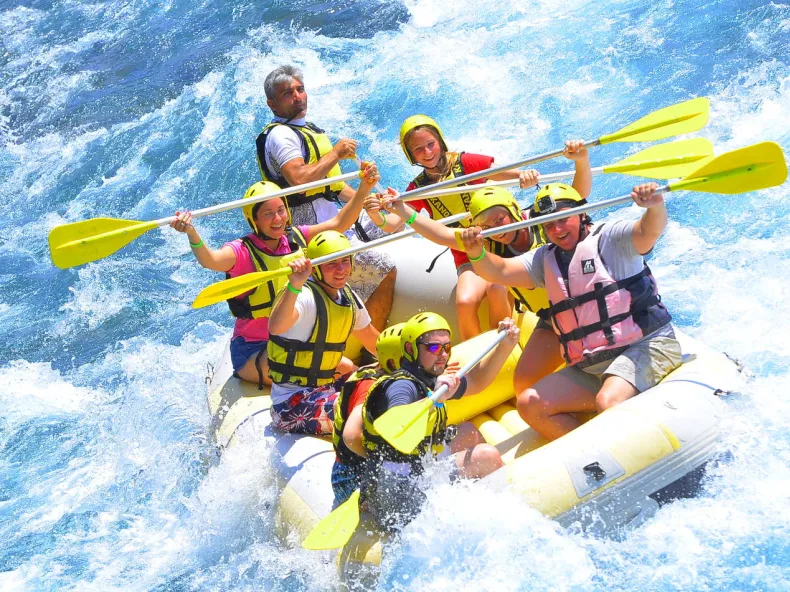
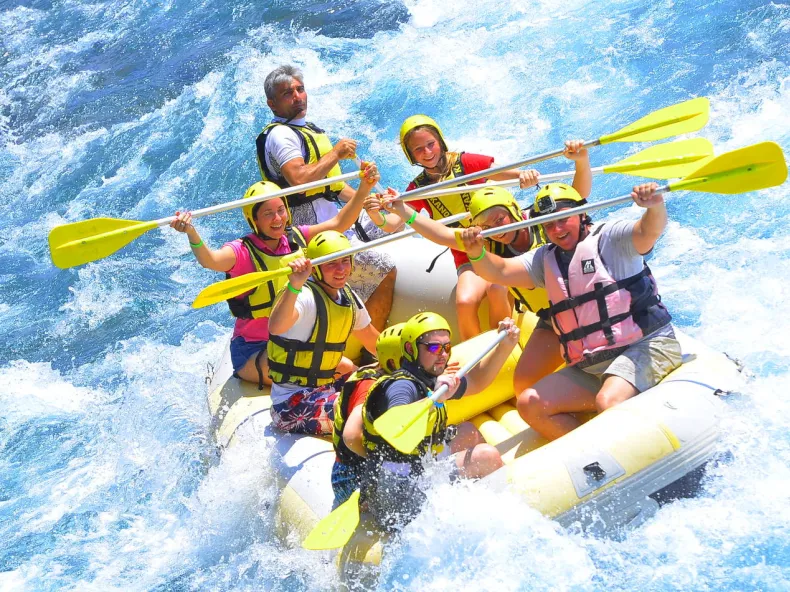
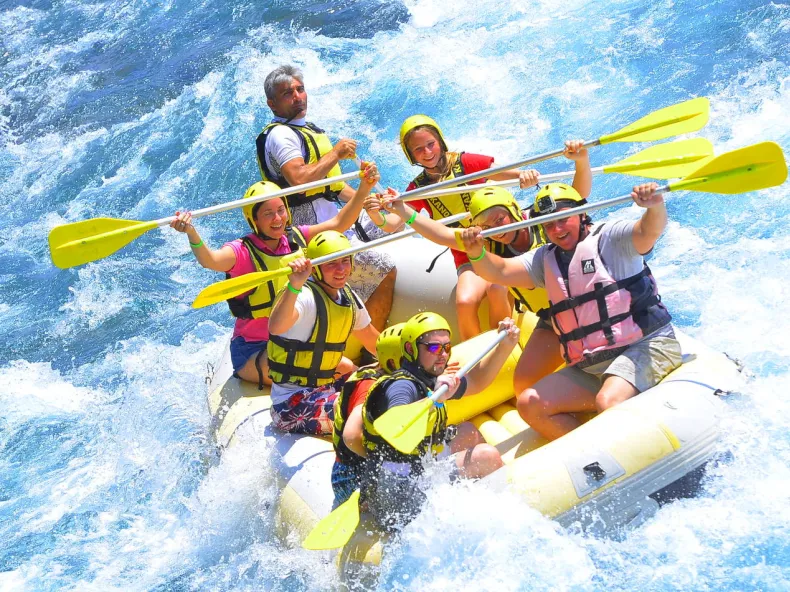
Rafting on the Koprucay river through Koprulu Canyon National Park is splashy by nature. The rapids are gentle grade II-III and beginner-friendly, but you will get wet, and the water is cold snowmelt even in the middle of July and August. Anything on your face that can slip, fog or wash away needs a plan before you push off.
Glasses on the river: the strap is everything
If you wear prescription glasses and rely on them to see clearly, you can absolutely keep them on for the rafting run. The single most important thing is a retainer strap. A sports strap or neoprene floating cord loops around the arms of your glasses and holds them snugly to your head, so that when a wave hits or you lean into a rapid, your glasses stay put instead of disappearing into the river.
- Bring a strap from home. A simple elastic or neoprene eyewear retainer costs very little and is the best insurance you will ever buy for a river day.
- Choose a floating cord if you can. Neoprene floaters keep glasses at the surface if they do come off, giving the guide a chance to grab them.
- Tighten before you launch. Adjust the strap on dry land so the glasses sit firm but comfortable under your helmet.
Be realistic, though: even with a strap, glasses will get splashed, spotted and fogged. You will spend part of the run looking through water droplets. That is fine for enjoying the scenery, but if your glasses are new, very expensive or irreplaceable on holiday, think hard before risking them.
When to leave your glasses behind
Sometimes the safest choice is to leave your everyday glasses in the minibus or in your dry bag on the bank. Consider this if:
- Your prescription is mild enough that you can enjoy the canyon scenery without perfect focus.
- Your glasses are your only pair and losing them would ruin the rest of your trip.
- You would rather relax and splash freely than fuss over your frames the whole way down.
A smart middle path is a cheap backup pair or an old prescription you no longer wear daily. Strap those on, and if the worst happens you have lost almost nothing.
Contact lenses: usually the easier option
For many people, contact lenses are the more comfortable choice for whitewater. They will not slip off your face, they do not fog, and you keep clear vision throughout the run. Soft daily disposables are ideal, because if river water gets in your eyes you can simply remove and bin a lens and pop in a fresh one afterwards.
- Pack a spare set. Bring at least one extra pair plus a small bottle of solution, kept dry on the bank.
- Wear sunglasses over them. A cheap pair of sunglasses on a strap protects your lenses from splashes and glare, and you will not mind if they take a knock.
- Blink, do not rub. If water splashes your eyes, blink it clear rather than rubbing with wet hands.
The one caution with contacts is that river water is not clean, purified water. Getting untreated water directly in the eye while wearing a lens carries a small hygiene risk, so keep your eyes closed under a big splash, use fresh lenses afterwards, and never top up your eyes with river water.
Prescription sunglasses and the practical winner
If you own prescription sunglasses, they are a strong all-rounder: clear vision, glare protection and one item to manage instead of two. Just fit them with a strap like any other glasses. For most nervous first-timers, though, the simplest recipe is contact lenses plus cheap strapped sunglasses, or everyday glasses on a good retainer if you do not wear contacts.
What actually happens on the day
Free hotel pickup by minibus is standard, with departure in the morning and a return to your hotel in the late afternoon or early evening. A trained guide rides in every raft, and a helmet and life jacket are provided and compulsory for everyone. Your guide has seen countless pairs of glasses and can offer a quick word of advice before you set off, so do ask. You can browse the full range of trips, including the shorter family route, over on our tours page.
Whatever you decide, the key is to sort it before you are sitting in the raft. Strap your glasses, pack spare lenses, keep a dry bag on the bank, and you can focus on the fun instead of your frames.
Ready to take the plunge? Explore our rafting trips from Side and book with confidence, knowing your eyes and your eyewear are sorted.