Deep in the Taurus Mountains north of Manavgat, a single stone arch leaps across the Koprucay river. This is the Oluk Bridge, and it is the reason the whole canyon carries the name it does.
The Turkish word kopru simply means bridge. Koprulu Kanyon translates, roughly, as "the canyon with the bridge" or "the bridged canyon" and the bridge at the heart of that name is the Oluk Bridge, also written Olukkopru or Oluk Koprusu. It is easy to travel through this landscape chasing turquoise water and forested cliffs without realising that the star attraction, the thing that named the place, is a modest-looking span of ancient stone.
What the Oluk Bridge actually is
The Oluk Bridge is a Roman-era stone arch bridge that crosses the Koprucay within Koprulu Canyon National Park. It is built in the classic style of the period: a single, tall, humpbacked arch of dressed stone, rising steeply from one rocky bank to the other so that the river can pass beneath it in full flood without touching the roadway above.
Bridges of this kind were engineered to last, and this one has. Roman and later road-builders across Anatolia favoured the arch precisely because it grows stronger under load, funnelling the weight of everything crossing it down through the stone and into the bedrock on either side. Centuries of foot traffic, pack animals and weather have worn the surface smooth, but the essential shape endures, framing a clean window of daylight over the cold, clear river.
Why it was built here
Nothing about the Oluk Bridge is accidental. The Koprucay is fed largely by karst springs high in the mountains, which keeps it cold, clear and often a startling turquoise, and it runs fast and deep through a genuine gorge. For the people of the ancient world, that gorge was an obstacle. A canyon this steep and this well-watered could not simply be forded, especially not by loaded animals or wheeled traffic.
The bridge solved that problem, and in doing so it stitched the two sides of the canyon together. Up in the hills above the river stood Selge, an ancient Pisidian and later Roman city famous for its great theatre carved into the mountainside. A city of that standing needed reliable links to the wider road network of the region, and crossings like the Oluk Bridge were part of that connective tissue, carrying people, produce and trade in and out of the high country.
A crossing with deep roots
It is worth pausing on how old this way of moving through the landscape is. The wider region is threaded by the long-distance St Paul Trail, a walking route that traces historic paths through the Taurus, and the canyon has been a corridor for travellers, herders and traders for a very long time. The Oluk Bridge is a physical survivor of that history, a piece of working infrastructure that has quietly outlasted the empires that first needed it.
Around it, the national park protects a landscape of cypress and pine forest clinging to steep slopes, with the Koprucay threading a bright line through the green below. Standing on or beside the old arch, with the river roaring underneath, you get an unusually direct sense of how ancient engineers read a place and answered it in stone.
How you pass near it on a rafting day
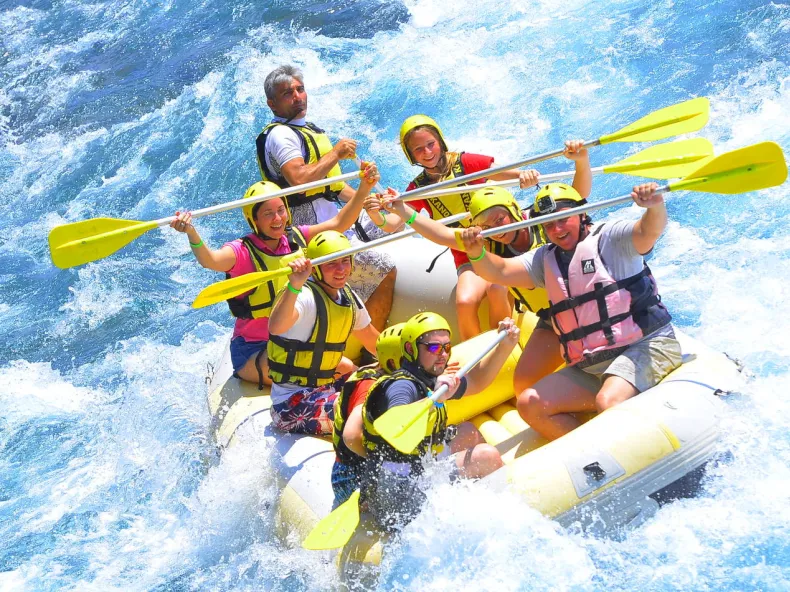
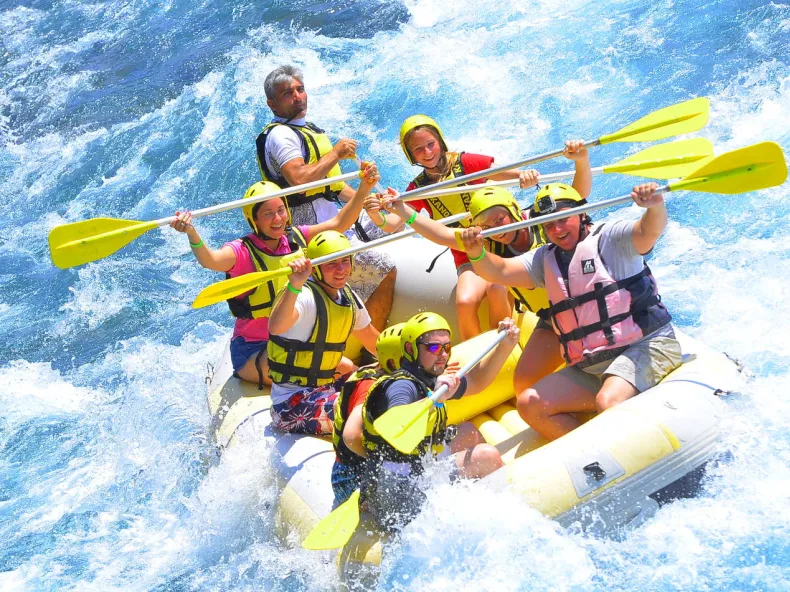
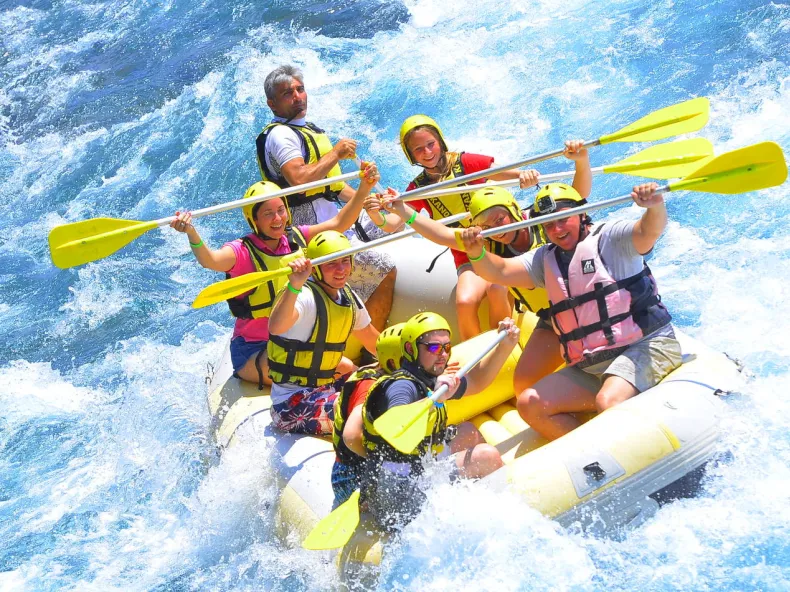
Most visitors experience Koprulu Canyon from the water, and rafting is the most popular way in. Trips launch from the village of Beskonak and run roughly fourteen kilometres of gentle grade II to III water, the kind of rapids that are lively and splashy but welcoming to first-timers and families rather than white-knuckle extreme.
From the river, the canyon reveals itself in a way no road can match: cold spring-fed water, sculpted rock, overhanging forest, and the old stone crossings that gave the place its name framed against the sky. A rafting day is as much a journey through the canyon's human story as its natural one, and gliding beneath or beside a centuries-old arch is a quiet highlight that photographs rarely do justice.
If you would like the fuller picture of the park, its bridge, Selge and everything else worth seeing here, our guide to things to do in Koprulu Canyon lays it all out. You can also browse the range of canyon and rafting tours to find the trip that suits you.
The Oluk Bridge has watched the Koprucay flow past for a very long time. The best way to meet it is from the river itself, so when you are ready, come and explore Koprulu Canyon on a rafting day and see the ancient stone the way the water does.