Step into the Koprucay on a scorching August afternoon and your first reaction is almost always the same: a sharp, breath-catching gasp. While the beaches near Side and Antalya bake in the Mediterranean sun, the river threading through Koprulu Canyon stays startlingly cold and clear - a ribbon of pale turquoise winding between cypress and pine. It feels like a contradiction. It isn't. The explanation is a beautiful piece of natural science, and once you understand it, the river makes complete sense.
Born from the mountains, not the surface
Most rivers you meet on a hot summer's day are warm because their water has spent time near the surface, gathering heat from the sun as it flows across open land. The Koprucay is different. It is fed largely by karst springs rising out of the Taurus Mountains, and that single fact governs almost everything about its character.
The Taurus range is built largely from limestone - a rock that rainwater and snowmelt slowly dissolve over long periods of time. Across thousands of years, water working through cracks and fissures has hollowed out an underground world of channels, caves and hidden reservoirs. Rain and melting snow high in the mountains sink into this stone labyrinth rather than running straight downhill, travelling underground for a long way before re-emerging lower down as powerful springs.
Why karst water stays so cold
While it is underground, the water is shielded from the sun entirely. Deep rock holds a steady, cool temperature year-round, so the water that finally surfaces has been kept chilled the whole way through. Much of it also began as winter snow high in the Taurus, melting slowly and feeding the springs long after the peaks have thawed at the surface. The result is a river that emerges cold and then simply doesn't have far enough to travel - or enough time in the sun - to warm up meaningfully before it reaches you in the canyon.
This is why the Koprucay can stay bracingly cold in the middle of summer while the sea a short drive away is bathwater-warm. It isn't chance or altitude alone; it's the plumbing of an entire mountain range.
Why it looks turquoise and clear
The colour has the same origin. Because the water spends its journey filtering slowly through rock rather than tumbling over loose soil, it arrives remarkably clean, carrying very little mud or sediment. Clear water lets light travel down and scatter back, and dissolved minerals from the limestone give that scattered light its characteristic pale, milky turquoise-to-green glow. On a bright day, over a pale rocky riverbed, the effect can be genuinely luminous.
Add the deep shade of the canyon walls and the surrounding forest, and you have a river that reads as almost jewel-like - one of the defining sights of the whole national park, alongside the Roman-era Oluk Bridge arching over the gorge and the ruins of ancient Selge in the hills above.
What this means for rafters
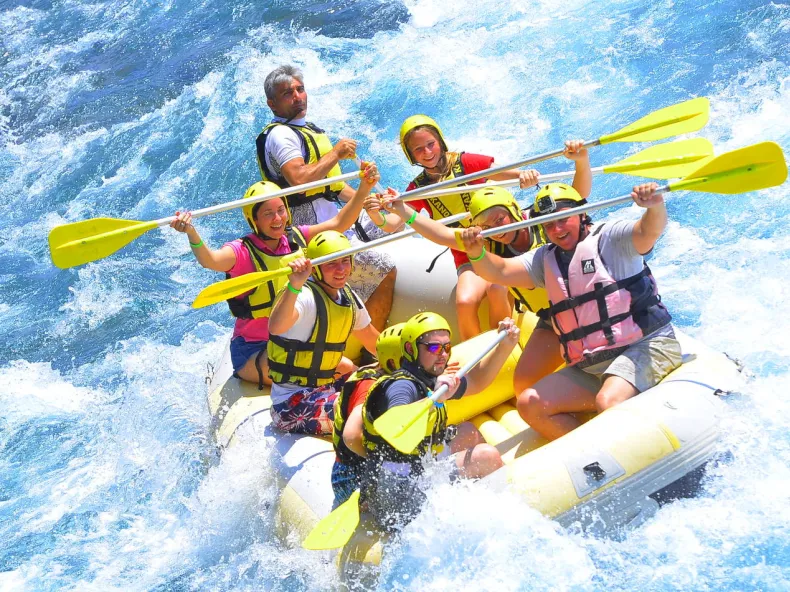
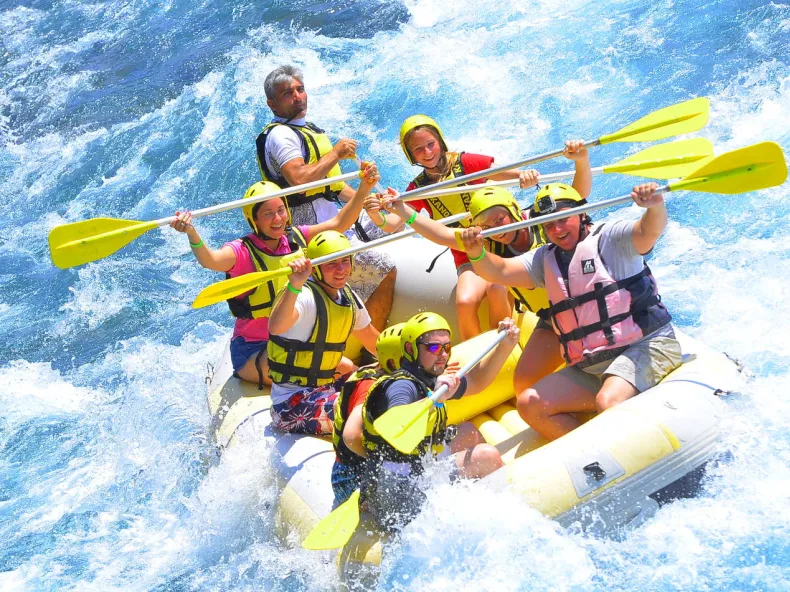
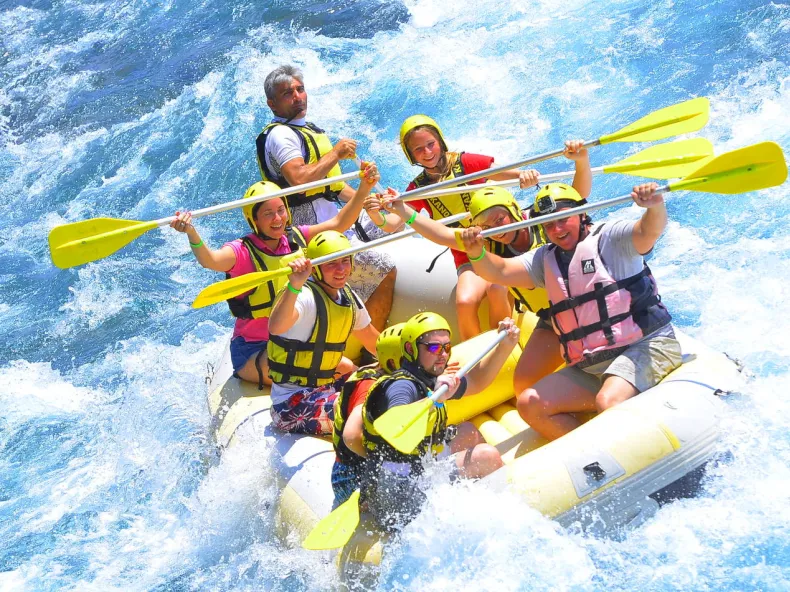
All of this is lovely to know from the bank. In a raft, it becomes something you feel. The Koprucay's grade II-III rapids run for around 14 kilometres, and the water is genuinely cold - which is precisely why a summer rafting day here is so refreshing when the air is hot. That first splash is a shock in the best possible way.
- Dress for cool water, not hot air. The sun may be fierce, but the river is not. A quick-drying layer helps once you're wet.
- Expect to get soaked. Splashes over the bow are part of the fun, and that cold water is exactly what makes the day feel so alive.
- Bring a warm, dry layer for afterwards. You'll appreciate it during the quieter stretches and the drive home.
- Wear secure footwear. The riverbed is clean but rocky, and the same clarity that makes the water beautiful means you can see just how solid the stones below really are.
The cold, clear Koprucay isn't a quirk to endure - it's the whole point. It's the reason the canyon feels like a different climate from the coast, and the reason a day on the river is such a vivid escape from the heat.
Ready to feel it for yourself? Explore Koprulu Canyon and browse our rafting trips from Side to spend a day on the coldest, clearest turquoise water in the Taurus.